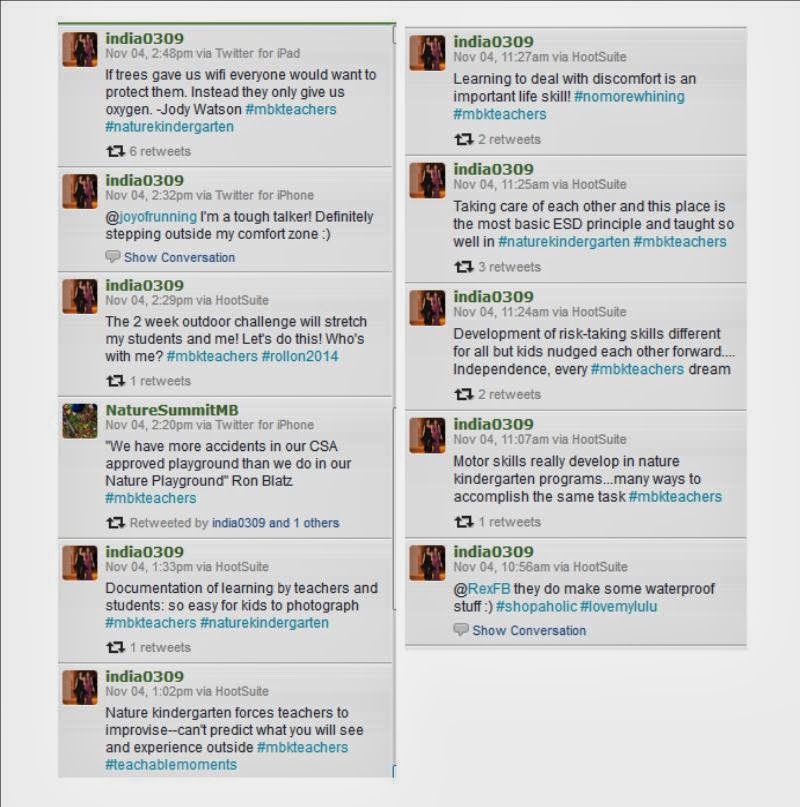
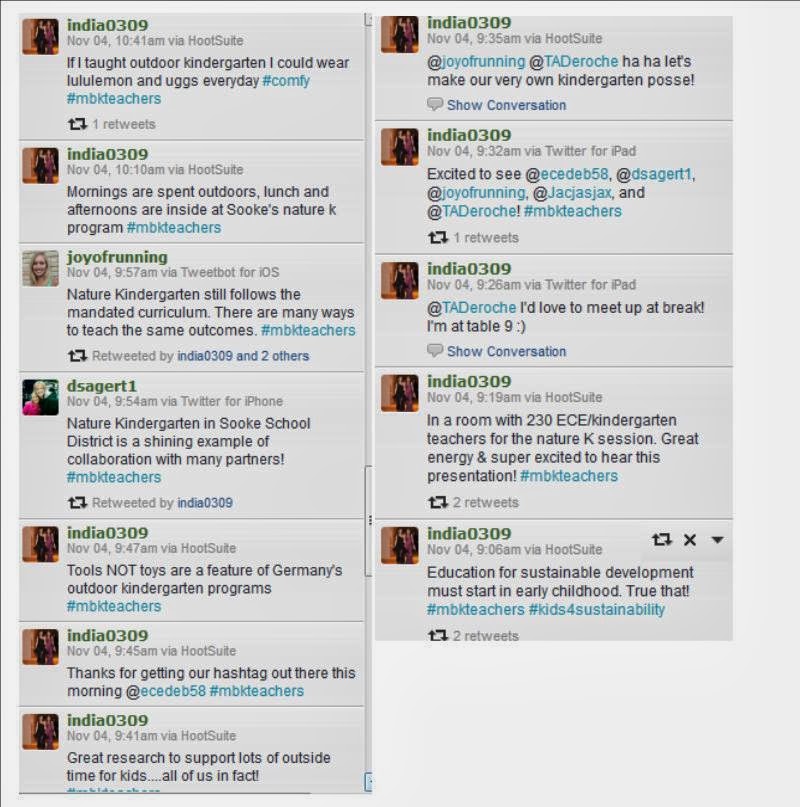
It was also a great day for connecting with some of my favourite kindergarten colleagues, and we had a lively back chat running with the hashtag #mbkteachers. Take a look at some of the tweets I sent as I reflected on and shared my learning throughout the day.
Maximizing my Learning Gardens/Outdoor Classroom: I am very fortunate to have a door that opens onto our outdoor classroom and learning gardens. There's raised vegetable beds, fruit trees, a pergola with great big rocks for sitting, and a beautiful mural on the school walls. How have I used it so far? Well I've read stories out there, we've had picnic lunches, provided chalk for writing and drawing on the sidewalk, set up my water table there, and taken various other toys outside for play. How can I make better use of this terrific space that is so conveniently located beside my classroom?
-install a chalkboard to make writing materials more readily available to students
-get students more actively involved in gardening (one colleague suggested herb gardens in old tires)
-turn the outdoor classroom into an actual extension of our indoor classroom where students always have the option to read, work, play, etc.
Outdoor Kits/Packs:the presenters talked about how every student has a backpack of supplies that accompanies him/her each day on outdoor excursions. What would I include in an outdoor kit for my students?
-magnifying glass
-clipboard with paper and pencils/markers for documenting learning, making notes, etc.
-iPad or Microsoft Surface in a waterproof/shockproof case would be perfect to capture photographs, create drawings and images. Also mobile devices with the SMART Notebook app would be terrific to enable students to participate in a variety of learning experiences.
-a change of clothes, extra mittens, etc.
-water bottle and snack
-my teacher pack would include tissues, hand sanitizer, baby wipes, cell phone, digital camera, band aids, and other supplies depending on the day.
Tools Instead of Toys: the presenters raised an excellent point that our kids don't need more toys to enhance play and learning. Instead they need age-appropriate tools that they can use for a variety of tasks. The richest learning usually occurs when students are planning and completing activities that have a very real word purpose, and it only makes sense that we require real tools for authentic learning.
Venturing Further Afield: within ten minutes, I have access to a pumpkin patch, marshes, and a lake with a beach. If I can organize transportation and obtain board approval to visit these sites, a whole world of learning opportunities open up. There is also lots of green space in our community within walking distance of the school. We just need to get out there and explore!
Take the Two Weeks Outdoors Challenge: I've thrown caution to the wind and signed up for this. Keeping my fingers crossed for great weather this spring :) Are you brave enough to take the challenge? Let me know if you are as it would be great to plan some activities together!
Our First Outdoor Learning Activity: since we were already learning about dinosaurs (see previous blog post here), I planned a learning experience to explore how big the dinosaurs were. Since our classroom wasn't big enough to physically measure out the dinosaurs, going outdoors seemed like a great option. We chose five dinosaurs and used Bing to find out how long they were (check out Bing for Schools--such a great program). Even though Canada uses the metric system, I made the decision to use feet. This would allow us to physically pace out the length of dinosaurs rather than use a metre stick or tape measure (just too difficult for 5 year olds). We looked at the metre stick and talked about how many of our feet made up a metre. Then we printed the numbers to represent how many feet long each dinosaur was.

We printed out the posters we made for each dinosaur (see above), and took them outside with our camera, pylons, and tape.

It was a great opportunity to develop numeracy skills while incorporating bodily-kinesthetic learning styles as we paced out each dinosaur--we all held hands in a line and counted each step out loud. We used pylons to show the head and the tail of each dinosaur and taped our signs to them. This allowed us to make comparisons about the lengths of the dinosaurs.


So our first outdoor learning experience was a huge success. The cool temperatures kept everyone alert, and physically measuring the size of the dinosaurs made the learning experience real to the students in a way that wasn't possible inside. The only way it could be improved upon was pointed out by one student--"Can we have hot chocolate next time?"
So give it a try--bring nature into your kindergarten program. It's nothing revolutionary, it's available to everyone in some shape or form, and you and your young learners might be surprised where it leads you.
Another great resource...
Playing with Sticks: Forest Kindergarten and Nature Play

